Get in touch
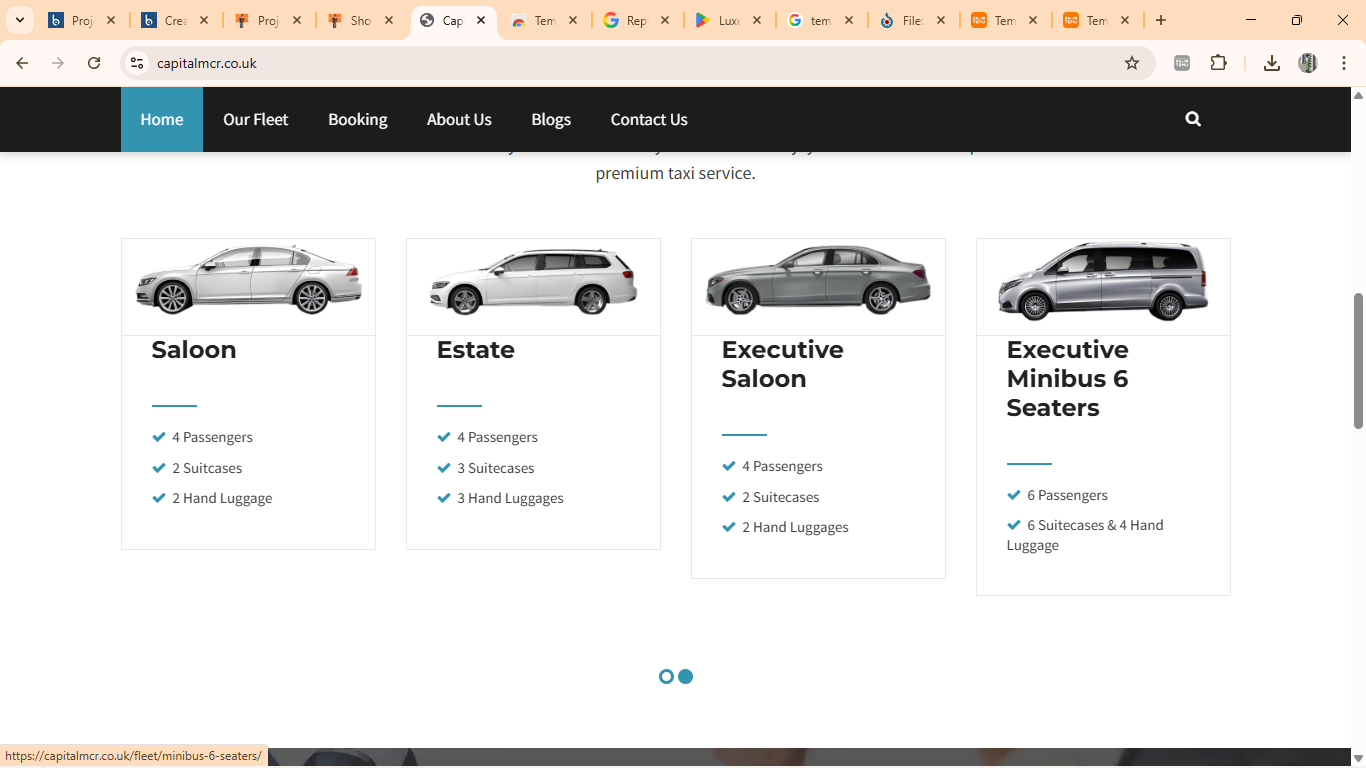
A professional corporate website built with Laravel framework for Capital MCR UK Limited, featuring custom functionalities, responsive design, and seamless platform migration from Laravel to WordPress for enhanced content management capabilities.
Client
Website

Project Overview
Capital MCR is a comprehensive corporate website development project undertaken for Capital MCR UK Limited, a prominent business entity based in Manchester, United Kingdom. The project involved building the foundational architecture and codebase for the company's online presence using the Laravel PHP framework. This engagement demonstrated the complete web development lifecycle from initial client consultation and requirements gathering through technical implementation, iterative development, and strategic platform migration to meet evolving business needs.
As a freelance Laravel developer working remotely for this UK-based client from March 2025 to November 2025, I was responsible for establishing the technical foundation of the website, implementing custom features tailored to the company's specific requirements, ensuring responsive design across all devices, and facilitating a smooth transition to WordPress platform as per the client's strategic decision for simplified long-term content management. This project showcased my versatility in full-stack web development, client communication, adaptability to changing requirements, and expertise in both Laravel and WordPress ecosystems.
Project Scope and Objectives
The primary objective was to create a professional, modern corporate website that effectively represents Capital MCR UK Limited's brand identity, communicates their services and value proposition clearly, provides easy navigation for potential clients and partners, establishes credibility and trust in the marketplace, and serves as a central hub for business information and client engagement. The website needed to reflect the company's professionalism while being maintainable and scalable for future growth.
Initial discussions with the client revealed specific needs for custom functionality beyond standard website templates, integration capabilities with third-party business tools, responsive design optimized for mobile users, search engine optimization considerations, and content management flexibility for non-technical staff. These requirements guided the technical architecture decisions and development approach throughout the project.
Key Features and Functionalities
Technologies Used
Back-End Framework: Laravel 9.x PHP framework providing robust foundation for web application development. Laravel offered elegant syntax, comprehensive documentation, built-in authentication and authorization, powerful ORM (Eloquent) for database interactions, queue management for background tasks, task scheduling capabilities, and extensive package ecosystem. The framework's architecture promoted clean code, rapid development, and maintainability.
Programming Language: PHP 8.x for server-side logic and business rule implementation. Utilized modern PHP features including type declarations, arrow functions, named arguments, attributes, and improved error handling. PHP's maturity and widespread hosting support made it an excellent choice for the project.
Database Management: MySQL relational database for storing all website data including content, user information, form submissions, and system configurations. Implemented proper database design principles, utilized indexes for query optimization, and established backup procedures for data protection.
Front-End Technologies: HTML5 for semantic markup and structure, CSS3 for styling with modern features like flexbox and grid layout, JavaScript (ES6+) for interactive elements and dynamic functionality, Bootstrap framework for responsive grid system and UI components, jQuery for DOM manipulation and AJAX requests, and custom CSS for brand-specific styling.
Template Engine: Laravel Blade templating engine for creating dynamic, reusable views. Blade provided elegant syntax for displaying data, template inheritance for consistent layouts, component-based architecture, conditional rendering, and loop structures for dynamic content display.
Version Control: Git for source code version control, enabling tracking of all code changes, collaboration capabilities, branching for feature development, rollback capabilities for error recovery, and code review processes. Maintained a clean commit history with descriptive messages.
Development Tools: Composer for PHP dependency management, NPM for JavaScript package management, Laravel Mix for asset compilation and optimization, Artisan CLI for development tasks and database migrations, and local development environment using Laravel Valet or Homestead.
Design and User Experience
Development Process and Methodology
Platform Migration to WordPress
As the project evolved, the client made a strategic decision to migrate from Laravel to WordPress platform to enable easier content management by non-technical staff, provide access to extensive WordPress plugin ecosystem, reduce long-term maintenance complexity, leverage WordPress's user-friendly admin interface, and align with their internal team's existing WordPress expertise.
My role in the migration process included facilitating smooth transition planning, ensuring data integrity during migration, maintaining feature parity between platforms, preserving SEO rankings and URL structure, training client staff on WordPress administration, and providing documentation for the new system.
The migration demonstrated my flexibility and commitment to client success, even when project direction changed. I ensured that all custom features developed in Laravel were either replicated in WordPress through custom development or achieved using quality WordPress plugins. The transition was completed smoothly with minimal disruption to the website's functionality.
Technical Challenges and Solutions
Client Satisfaction and Outcomes
Capital MCR UK Limited expressed high satisfaction with the initial Laravel development, appreciating the professional code quality, attention to detail in design implementation, responsiveness to feedback and requirements, transparent communication throughout the project, and smooth facilitation of the platform migration.
The website successfully achieved its objectives of establishing strong online presence for Capital MCR, communicating services and value proposition effectively, providing easy content management capabilities, supporting business development and client acquisition efforts, and serving as a foundation for digital marketing initiatives.
Project Timeline and Deliverables
The project spanned from March 2025 to November 2025, with distinct phases including initial planning and requirements gathering (March 2025), Laravel development and feature implementation (April - July 2025), client review and iterative refinements (August 2025), WordPress migration planning and execution (September - October 2025), and final testing and launch (November 2025).
Key deliverables included fully functional Laravel-based website, comprehensive documentation of custom code, MySQL database with populated content, responsive design across all devices, WordPress migration with feature parity, admin training materials and guides, and ongoing support during transition period.
Professional Growth and Learning
This project enhanced my Laravel development expertise through practical application of advanced framework features. I gained valuable experience in international client communication and remote collaboration, understanding of corporate website requirements and expectations, platform migration strategies and execution, and balancing technical excellence with business pragmatism.
Working with a UK-based client improved my ability to navigate time zone differences, communicate technical concepts to non-technical stakeholders, adapt to changing project requirements gracefully, and maintain professionalism in all client interactions.
Technical Best Practices Applied
Throughout the project, I adhered to industry best practices including following Laravel's coding standards and conventions, implementing SOLID principles in object-oriented design, writing clean, self-documenting code, utilizing version control with meaningful commits, implementing proper error handling and logging, securing the application against common vulnerabilities, optimizing for performance and scalability, and documenting code and architectural decisions.
Lessons Learned
The project reinforced important lessons about the importance of flexible architecture that can accommodate changing requirements, value of clear client communication in preventing misunderstandings, necessity of comprehensive documentation for maintainability, benefits of iterative development with regular client feedback, importance of understanding business context beyond technical requirements, and value of professional relationships in successful project outcomes.
Your email address will not be published. Required fields are marked *